I’m back in England now, reflecting on the 17 days I spent in Buigiri. It was, without a doubt, my most successful trip yet thanks in large part to the incredible generosity of over 150 people who donated. Altogether, I brought £4,500 with me, surpassing my previous record of £3,000.
This was also the smoothest trip I’ve had. Almost everything went according to plan. Tanzania has changed a lot since my last visit – improved infrastructure, more stable electricity, and a stronger local economy have all made a difference. Yet, despite these developments, the poorest remain just as vulnerable, and the need for support is as urgent as ever.
I kept my visit low-key, unsure if many would remember me after such a long absence. But that doubt vanished the moment I stepped off the bus after a 10-hour overnight journey and heard a stranger say, “Welcome, Mr Tom.” It was heartwarming to be greeted by so many kind and familiar faces. While the adults hadn’t changed much, it was surreal to see the children I once knew now grown into adults. They were thrilled to see old photos of themselves – smartphones may be everywhere now, but few have pictures from their childhoods.
I started work right away, knowing my time was limited. With a larger budget than ever before, I was able to achieve more and on a greater scale. In the past, I’ve faced tough choices about who to include on food distribution lists. This time, the extra funds meant I could keep adding names instead of crossing people off.
Words can’t fully capture the experience, so here are some photos from the trip:
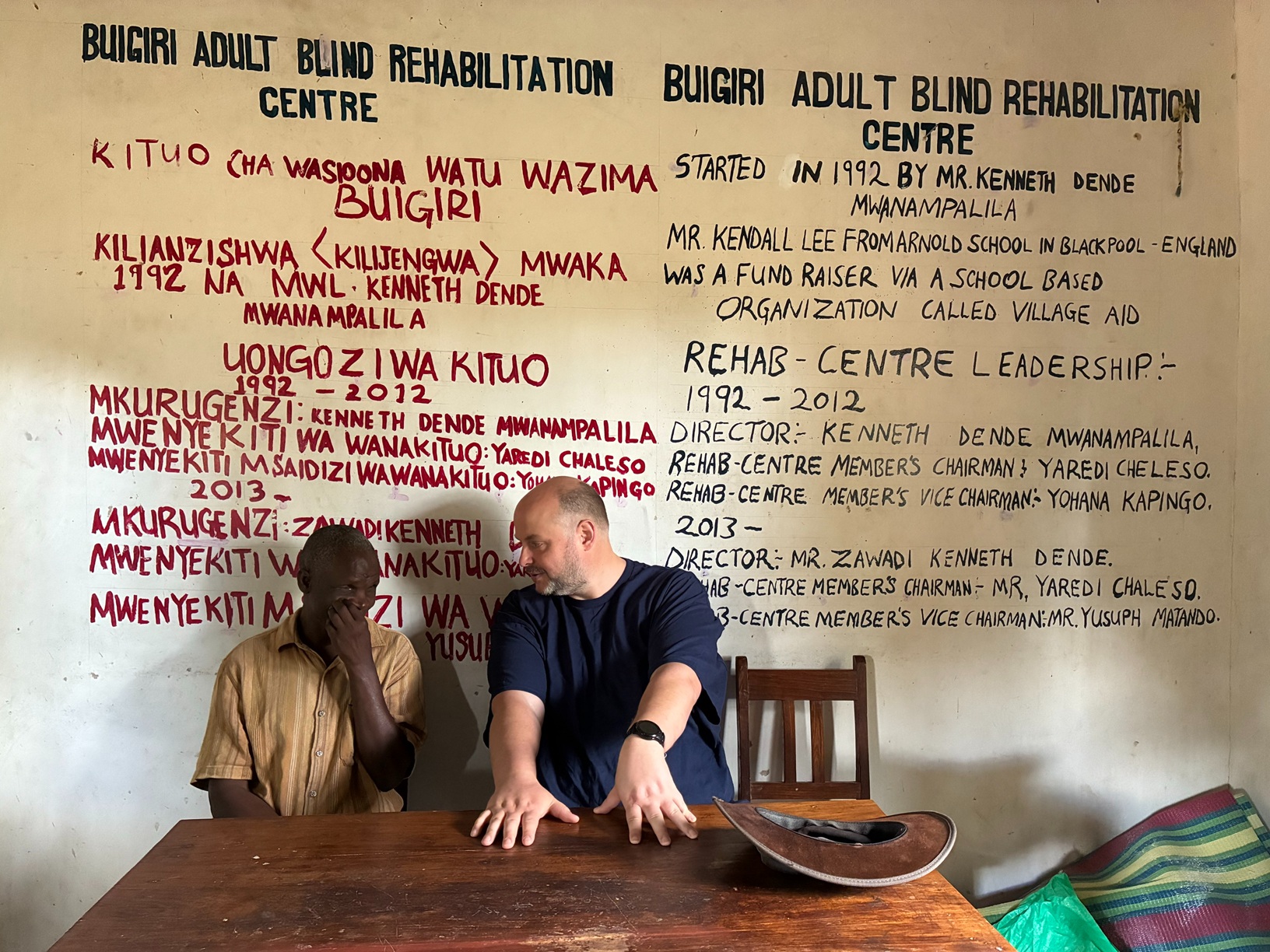
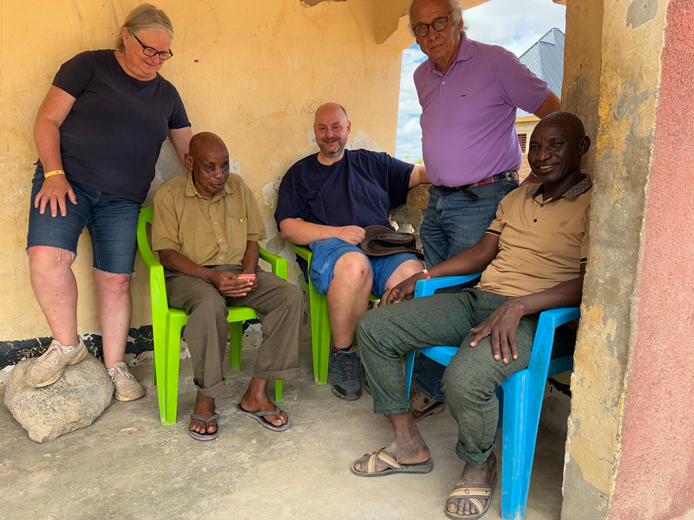
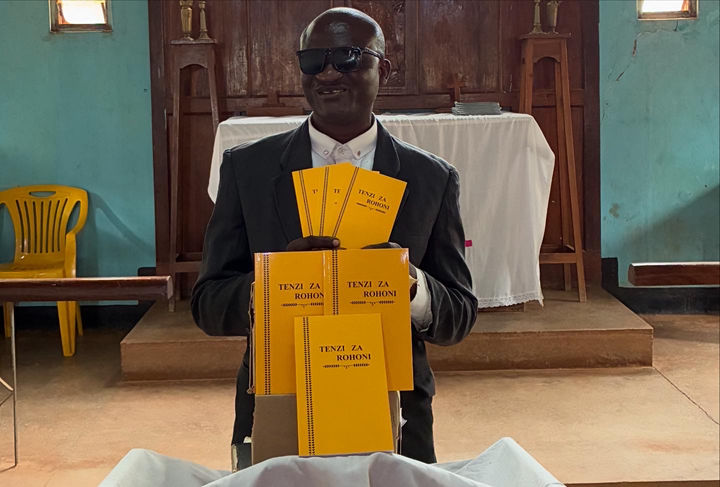
Sitting with the chairman of the Blind Rehab Centre. This is where I spent 3 months in 1999 planting trees, building fences and digging ditches.
The goodies I took out with me. The phones will go to the blind in remote areas so they can stay connected with the Tanzanian League for the Blind.
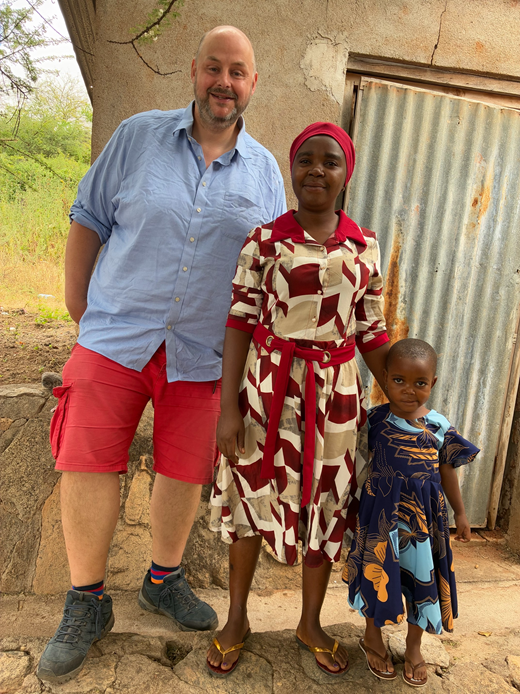
Teck with his wife and daughter. We became friends across a pool table almost 20 years ago. He spoke no English at the time, but I gave him an English-Swahili dictionary and a John Grisham book and he looked up every word he didn’t know. He emerged with surprisingly good English skills, and a solid knowledge of Mississippi jurisprudence.
I like my hat, but hers is much more stylish.
I remember Vumilia when she was a student at the blind school, now she lives with her husband Steve and children at the centre. She rears pigs and I helped her with 4 sacks of cement (£33) to improve the pig sty. All the families at the centre now have livestock, which is an indication of development and is great to see.
My Swahili is a little rusty, but they seemed to get what I was saying.
Enock is a friend of Teck’s and someone else I’m good friends with.
Why the long face?
Anna has helped me over recent trips with things like cooking and cleaning. In part it’s due to laziness on my part, but the house has no running water and food is cooked over charcoal and everything is so time-consuming. Plus she can really cook.
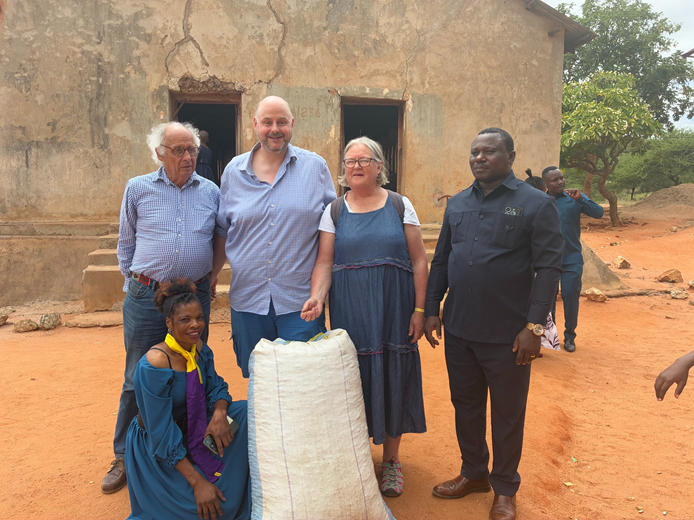
My Dad and Stepmother visited for a few days as part of an epic trip around Egypt and Tanzania. They were put to work in Dodoma where we visited the blind beggars to distribute goodies ahead of Easter.
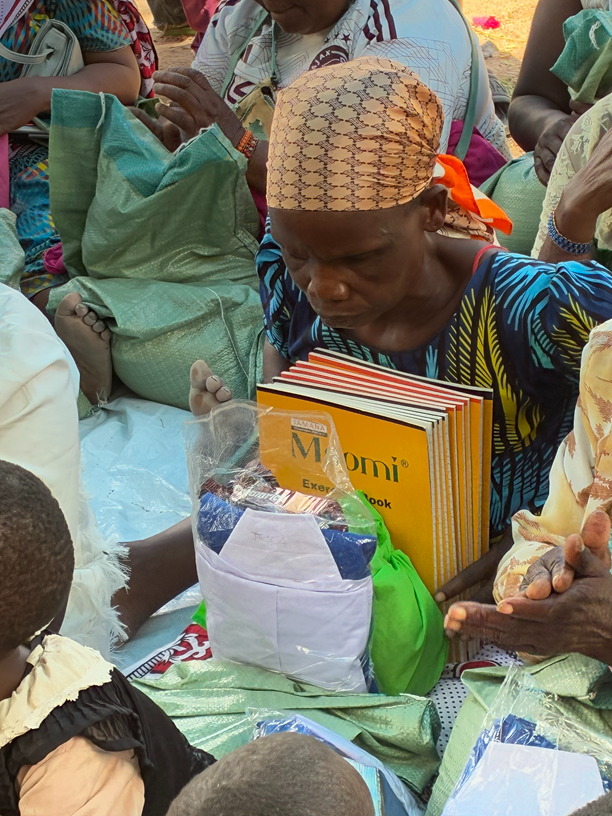
25 families in Dodoma each received a bag of rice and money to buy additional food for Easter. Those with school-age kids received exercise books and pens.
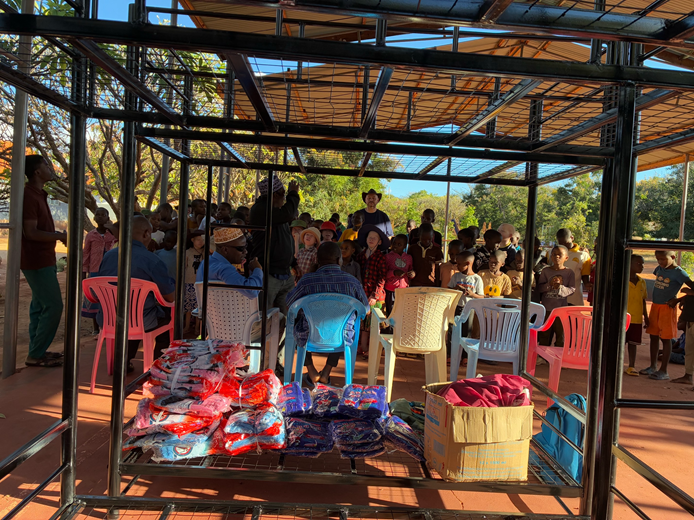
Across the trip, 95 kids received uniforms and these were the first batch to be handed out. You may think it’s as simple as going into a shop and buying a bunch, but oh no, this is Tanzania and nothing is simple. First you draw up a list of names of all the children, figure out who is in primary or secondary school and if any are albinos as they need more material, you then give it to a local tailor who meets each kid and measures them. I get an initial bill for materials, the tailoring team then get to work and I eventually collect the complete uniforms, arrange for all the children to gather, and hand them out. Uniforms are around £10-15 each and are very important. Without one, a child may be excluded from school. In addition, a ragged uniform singles you out, but you can take pride in owning a new shiny one.
Arranging blind people for a group shot is not easy!
One of the white sticks has found a new home. These only cost £5 in the UK but make a big difference to the blind in Tanzania.
The following day was Easter. My family agreed to come to church, but they may not have so readily agreed had they known it would be approaching 4 hours. The service ended in a fundraising auction where things like honey were sold off to raise funds for building a new church. I was heavily targeted by the auctioneer and figured I couldn’t escape without placing a bid – so put my hand up for this large sack of groundnuts only to be faced with stony silence from the rest of the congregation who I was relying on to outbid me.
Anna played a big part in the church service. She sung in 2 of the choirs and did some minister work, including telling me when I had to stand up and give a speech in Swahili. Thanks Anna! Afterwards, she fetched a photo she keeps in her bible of herself with Dawei and me in 2014.
There was no rest for Anna as she came from church to cook. This is what she knocked up every day. She’d cook enough food for 10 or more people and my door was always open for anyone to come and load up a plate. It cost me under £20 a day for the house, Anna’s services, and all the food. Bargain.
The house is in the Blind School and we visited the classrooms and were shown a Perkins Brailler – it’s essentially a 7 button typewriter that types in braille. This was cutting edge technology 30 years ago, but sadly the school hasn’t developed their technology. Attempts to set up a computer room have never really worked.
I kept it very quiet that I was coming, but as soon as I arrived word spread quickly that I was back. As days progressed, I would have more and more visitors who came to discuss their woes. Many I have assisted before and have faith in their sincerity, but some were turned away empty handed. I tend to focus on supporting those with disabilities, and mothers and grandmothers. Also, when my inner circle tell me someone leads a hard life and needs assistance, then they get help too. Thanks to the large amount of money given by my friends, I was able to help more people than ever before. Still, there were difficult conversations where I turned people away, and those are never pleasant.
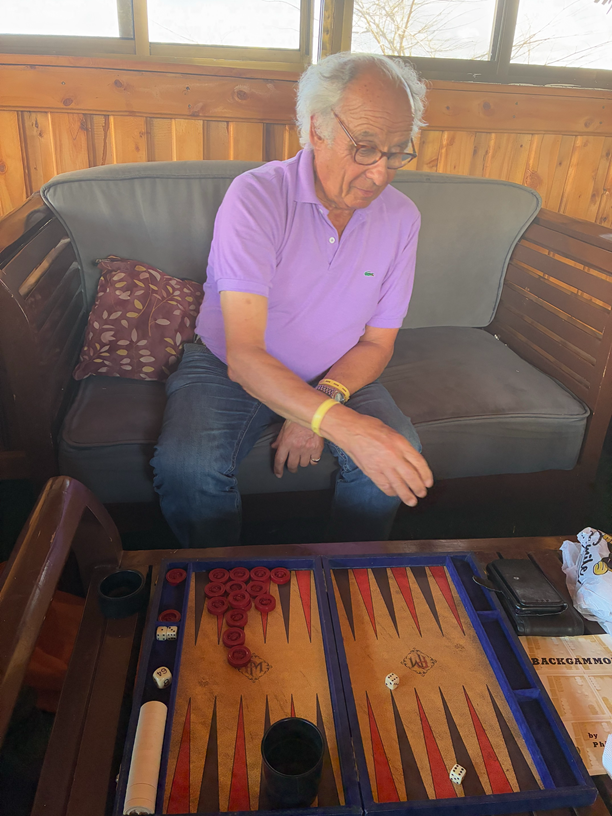
Our plans were put on hold for Easter Monday due to two deaths in the village, so we had a relaxed day, which I didn’t think I needed, but I ended up being very grateful for. I had told my Dad to pack light for this trip, but he still found room for his backgammon set.
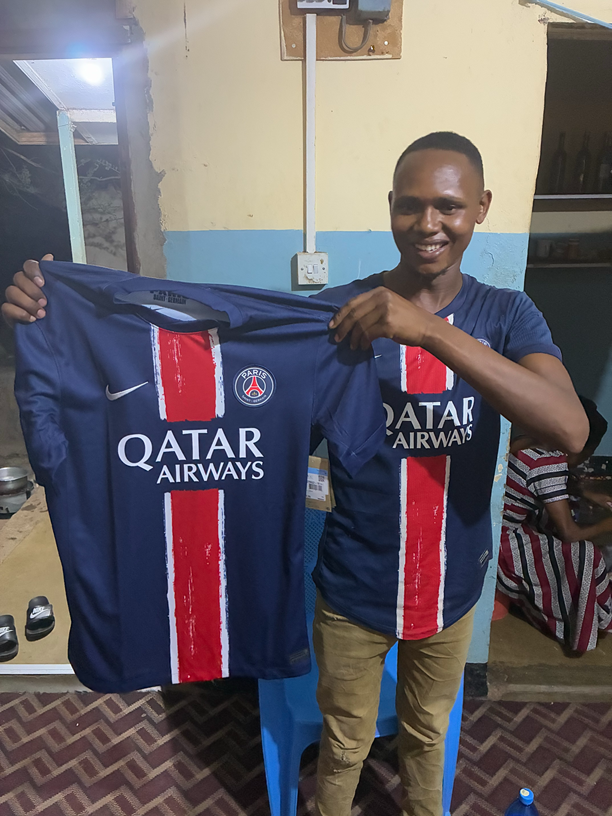
I’d been chatting earlier in the year to my friend Marc about how football shirts are always in demand in Tanzania – shortly after, a package turned up and he’d bought me 15 brand new shirts. Paolo visited my house in a PSG shirt and was delighted to be given an official version.
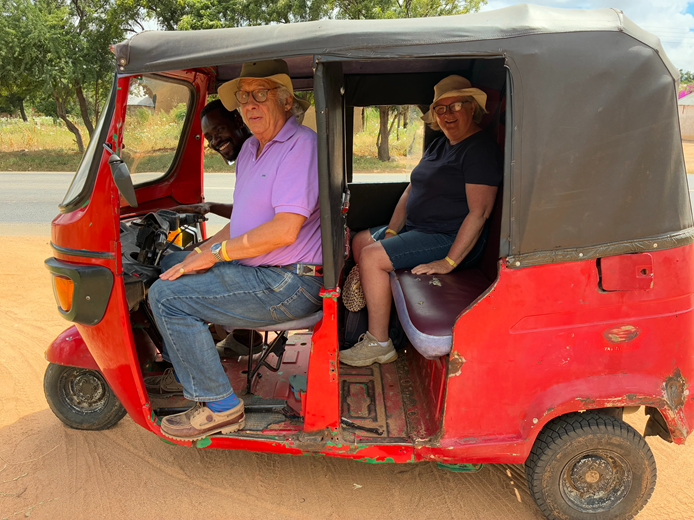
We are off on an adventure in Teck’s Bijaji. I’m so proud of how Teck has progressed his life. He had a particularly tough childhood where he essentially became head of his large family as a teenage boy. I’ve given a fair amount of assistance over the years, educating 5 of the children, building them a house, and a bunch of other stuff, but Teck has taken that opportunity and thrived. He has instilled a solid work ethic into his brothers and they now all have decent jobs, houses and families. Teck was the first in the village to own a Bijaji and he is rightly proud of that. He also owns two shops and a farm, plus he works as a bore hole engineer. He isn’t rich, but he has worked hard every single day to grind out a better life for himself and those close to him.
We were off to visit Gabriel Masaka and his son Daodi. Gabriel was an old man 26 years ago, but he still plods on. He needs an operation in Dar es Salaam and we gave a small contribution (£30) to the costs. His son Daodi is a renowned witchdoctor – he should specialise in fertility advice – his 52 children are a testament to his expertise. He is much revered in the community and has always been very kind and welcoming to me. He showed us his witch doctor’s hospital and answered our questions.
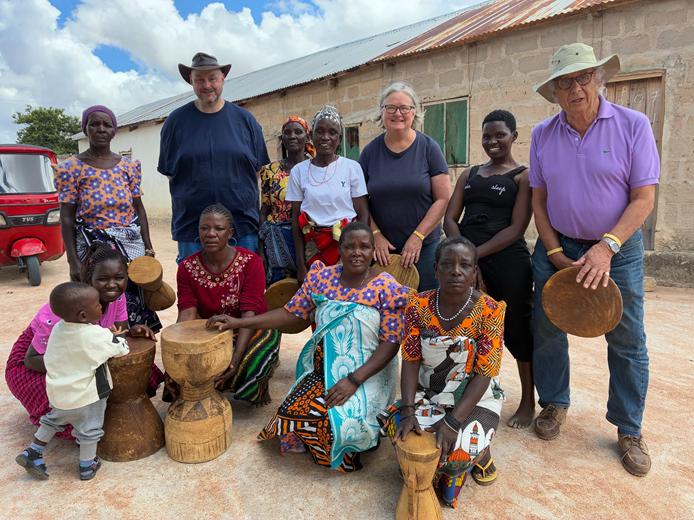
Some of Daodi’s wives and children played us Ngoma music, which is the traditional music of the local Wagogo people. Unfortunately for my family, audience participation was enforced.
As we left, a boy brought Daodi a chameleon. This will no doubt end up in a prescription.
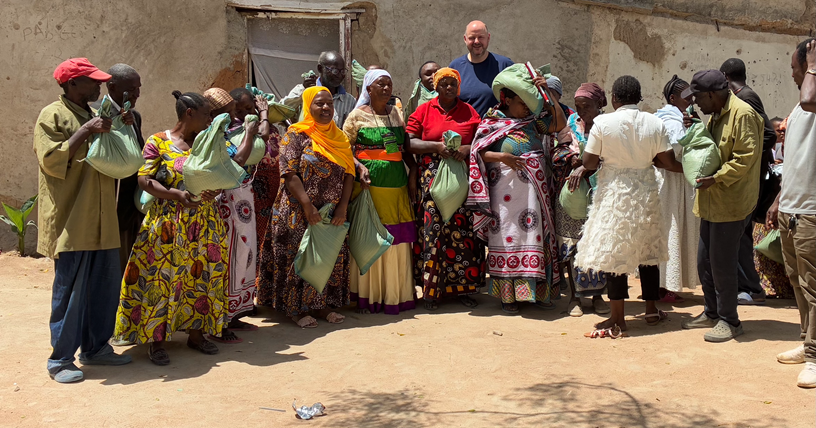
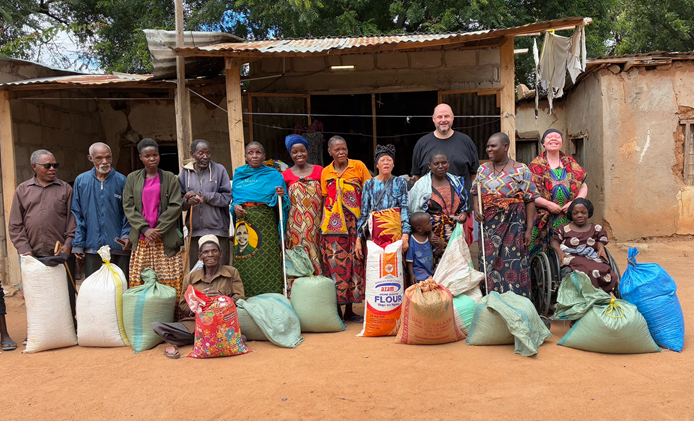
The next stop was at the rehab centre to distribute maize. This was 600kg which we divided amongst the 15 families.
It’s hard work filling the sacks. It’s then incredible to see frail people swing a 40kg sack onto their heads and totter back to their houses.
We met with Emejon. She was named after my sister Imogen 16 years ago – but something went wrong with the spelling! Emejon is studying sciences at school and has dreams of working in medicine.
This is the farewell to my family who were setting off home. Teck kindly gave them gifts of Zezes which is one of the local instruments. The chap in the middle is Mr Omary. He and I work very well together. When we first met he was a young teacher and his excellence radiated out. We’ve worked together over the past 20 years and during that time he has risen through the ranks and is now the elected leader for all disabled people in central Tanzania. He understands how I like to operate, and I always follow his advice about where to focus my efforts.
A little relaxation time – playing pool for old time’s sake. When we first met, he was probably the best in the village at pool, but I could just about compete. Nowadays I am very rusty and he kicked my butt – but I won the final game and I’m simply going to focus on that and not think about the carnage up to that point.
Meet Tom – a boy named in my honour. I have known his grandmother Mrs Kusenha for a long time and provided quite a bit of help to the family. She lives in a big house as her husband had a decent job and put it all into the bricks and mortar, but then died, leaving her destitute. The house is full of people with nowhere else to go.
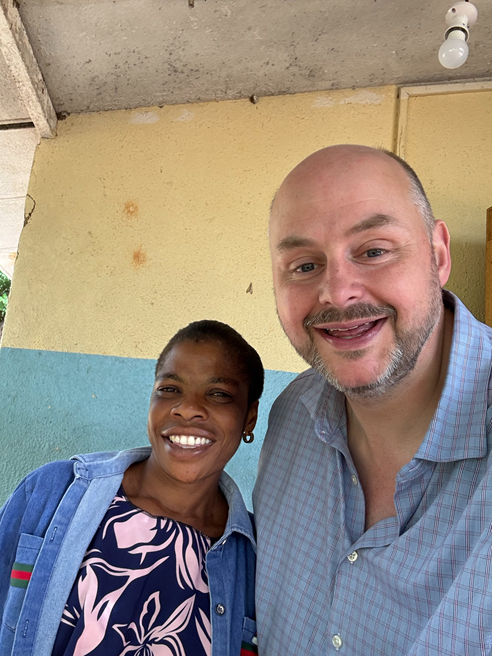
I knew Catherine when she was at the blind school, and I’ve never seen her not radiate joy. She needed 2 bags of cement (£16) to strengthen her house as it was damaged in a storm. I also gave her some Factor 50 to help protect her skin.
Returning from a night out with the teachers (LtoR is Kisamo, Fwejeje, Boa, Omary and me). The bar consists of a fridge and a few plastic chairs by the side of the busy road, but the beer is cold and cheap. Its a good time for us to make plans for the coming days, but I always have to write everything down because for some reason I forget by the morning.
The next day we travelled a couple of hours down bad roads to Hombolo. They have a school which has a unit for kids with additional needs – including physical and mental disabilities. They get support from an Irish charity called Kids for Schools, but life is still a struggle. I had heard the children were lacking tracksuits, so I brought a bunch with me, plus other bits.
The tracksuits in action
A classroom at Hombolo. This one at least has chairs, some other classrooms, including the dining hall are devoid of furniture.
Hombolo has a large dam which makes the surrounding area fertile
It also means that when people visit, they buy fish to take back home. Here Teck is sporting a fishy necklace
I arrive home to find more visitors – the price of getting help is they need to endure a photo with me
Kenneth is the priest at the blind school. He came to see me about needing help and I expected it to be something grand like rebuilding the church, but all he needed was hymn books, so I bought 50 from town and delivered them.
Happy had visited before to ask for help with items for school and she returned with her daughter to proudly show what she had bought. This cost around £15.
Many years ago I set up a program where friends in the UK could support kids in Africa. It cost £50-100 a year and provided them with everything they needed for school, plus some food for their home. Just before I left Bristol, my friend Judi asked me to try and see what happened to Martha who she supported. I put the word out and she was located living 50km away and she came to see me. It was quite emotional and she shed some tears as she spoke about how important that help was. At the time she was a young orphan, but she went on to pass her exams and now has a good life as a tailor.
Here is Martha when she was a child. She was the first of the kids to get support.
Malea and Olivia came to speak with me about the lack of food. I had already arranged a big order of maize for the village and so I added their names to the list of recipients
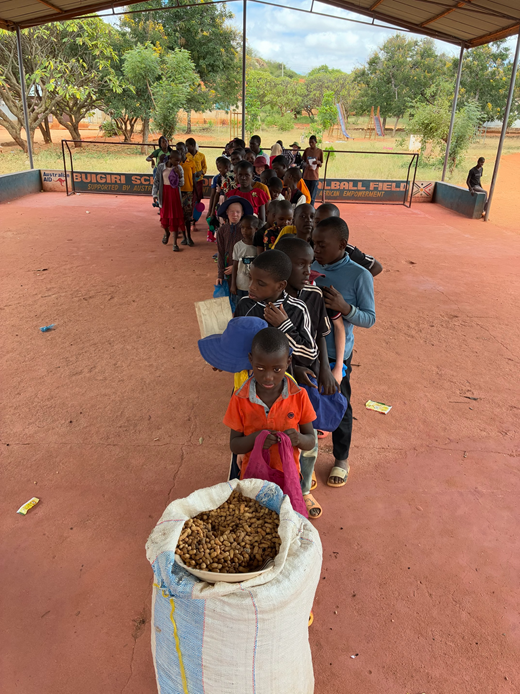
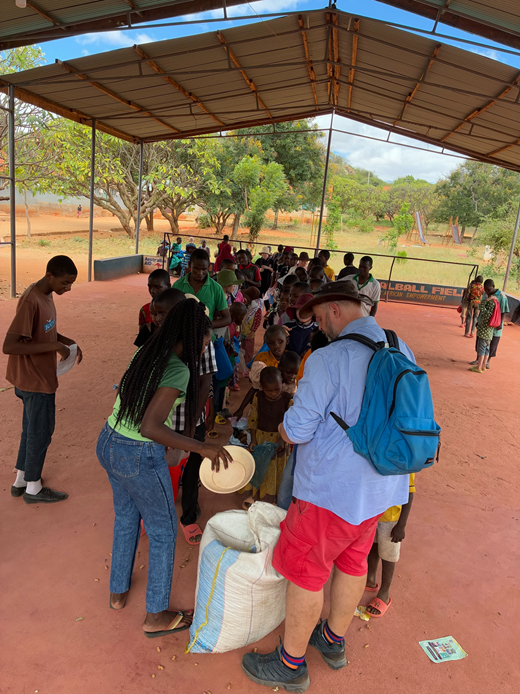
The nuts from the church found a good home at the blind school
One of my proudest achievements this trip was correctly guessing how many nuts to scoop into each kid’s bag to ensure we didn’t run out or were left with kilos of the stuff remaining.
The next morning Mr Omary and I headed into town to meet some of the blind. We have discussed for a while about setting up a business for several families to work cooperatively, and this was the final planning meeting. I have given 1.5m Tshs (£430) to establish a small café – this covers pots, pans, plates, table and chairs, food, drinks, and three months rent. This project is a big challenge for them, and the chances are it will fail, but the rewards from success are worth taking the risk. As a thank you, they kindly gave me a large plate of food to eat – Omary and I wished we’d been forewarned as we had a big lunch before arriving, and its considered rude to not eat what is handed to you.
I met up with Mr Idi there. He is an Islamic preacher and a leader of the blind. Years ago I built houses for some of the blind families. He selected the most in need. Although he also required a house he knew it would look bad if he was at the top of the list, but after the initial houses were built I stopped this type of project as it is complex and difficult to accurately budget. He has spent the past years slowly building his own home, but he was struggling to fund the 60 iron sheets for the roof. He has stockpiled 20, so I gave him money to buy an additional 20 (£150), which is quite a leap forward for him.
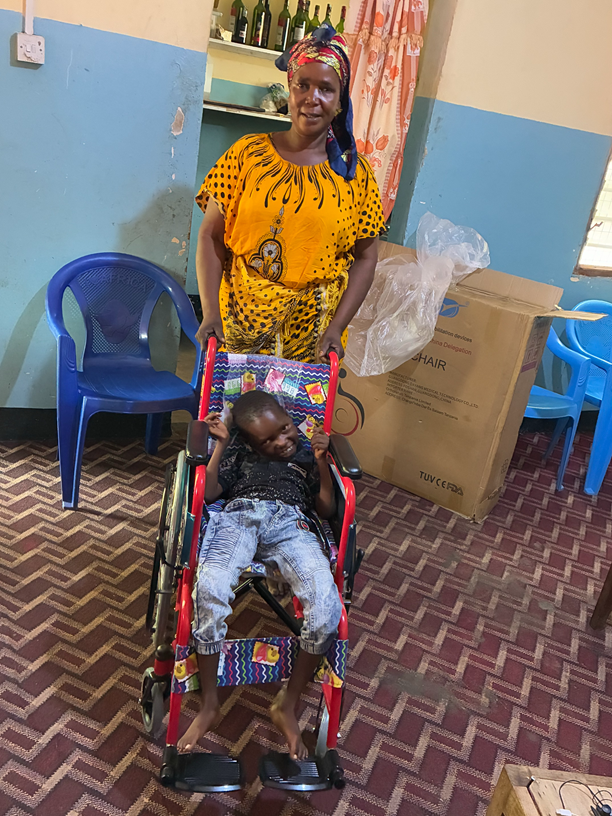
I heard of a boy from two villages away who is paralysed. He is 7 years old and getting too big for his mother to carry everywhere. I found the only child’s wheelchair in Dodoma for sale (£100) and he and his mother came to my house to collect it. It is still too big, but they can adapt it to make it work.
This is the final maize distribution of the trip – 17 elderly and/or disabled from the village each collected 40kg (£155 in total), plus a few shillings to transport it to their houses.
Teck’s older brother Raymond, and Raymond’s daughters Imogen and Imelda. I didn’t know before this moment that he had named his daughter after my sister Imogen. By chance, Imelda is my aunt’s name, and its quite a coincidence as it’s not exactly a common name in either country.
This was my farewell visit to the rehab centre where I dished out more uniforms. I also bought 3 months of electricity for their houses, to power the water pump, and to keep their maize grinder operational.
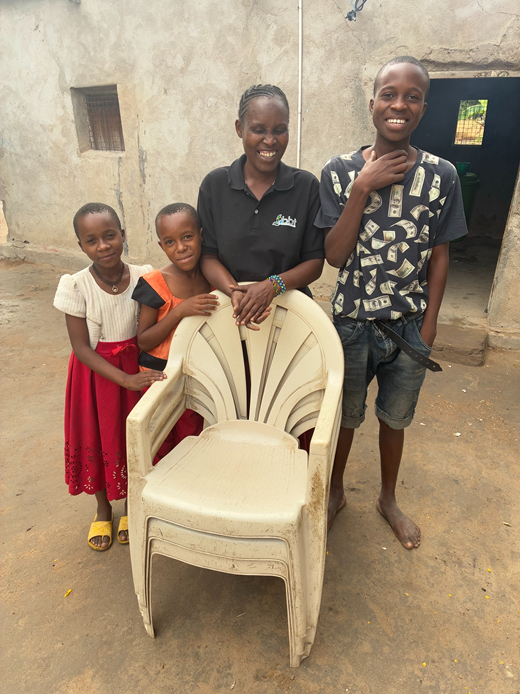
I paid a visit to Jen at the rehab centre. She shares a bed with her two youngest, but her son sleeps on the floor. I provided him with a new mattress (£25). Jen then brought out these chairs which I gave her many years ago and she wanted to show how she had cared for them. I didn’t mention there should have been 4!
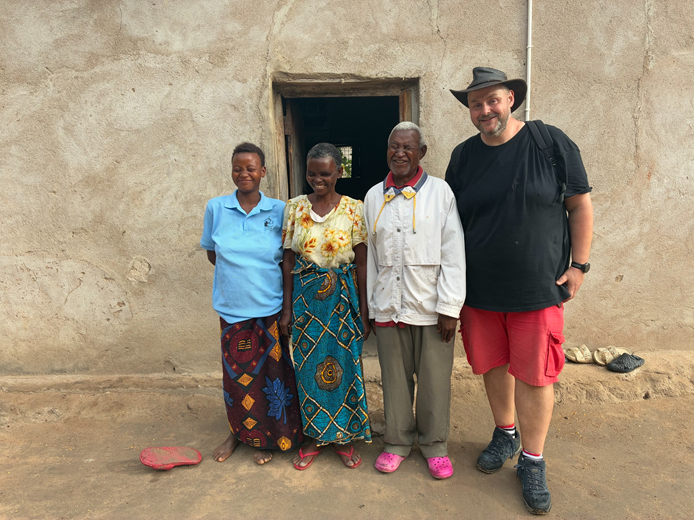
The chap next to me is Mr Kapingo, and he is joined by his wife Angelina and their daughter. Kapingo and I are close – during my first visit he was one of the few who spoke English. We then fully bonded several years later when he developed cancer and I got him a diagnosis, treatment and follow up care. Untreated he would have died in months, but almost 20 years on he is doing great.
This place used to be one person cooking over a single charcoal fire. I was their best customer for many months, often bringing others for lunch. Over time its enabled John to grow into a decent business. I didn’t know it was still going until I bumped into this woman who used to help with the cooking and she wanted me to see how it has developed.
And now to my final big activity of the trip – giving goodies to the blind school. The kids love Bop-it and I wish I had space for more than one in my luggage
Here are the three bunkbeds I had made. They are sturdy beasts and cost £100 each. Some of the children share beds, so this will ease the overcrowding and they will see out generations of children. I was also there to hand out the final batch of school uniforms, as well as sweaters, because for some reason kids get cold in the blazing sun. I also provided new mosquito nets for every bed in the school.
I’m so relieved the uniform production is done and dusted. They cost a fair chunk of my total budget.
And of course there has to be a group photo. The idea was to also show the bunk beds, but they are tricky to make out behind me.
Goalball is a game where you hurl a special ball at the opposition who listen to the scuffle along the ground and the ring of the internal bell, and hurl themselves onto the concrete to prevent it hitting the back wall. The school are the national champions, but they lack kit. In fact they did not even have a proper ball, so I brought this from the UK (£65). I was also asked to source mats for the kids to land on (£250), but these were too pricey for my exhausted budget. It is something to consider for the future.
The two teams pose for a photo. The blindfolds are to ensure fairness. I gave each child one of the football shirts to thank them for their demonstration.
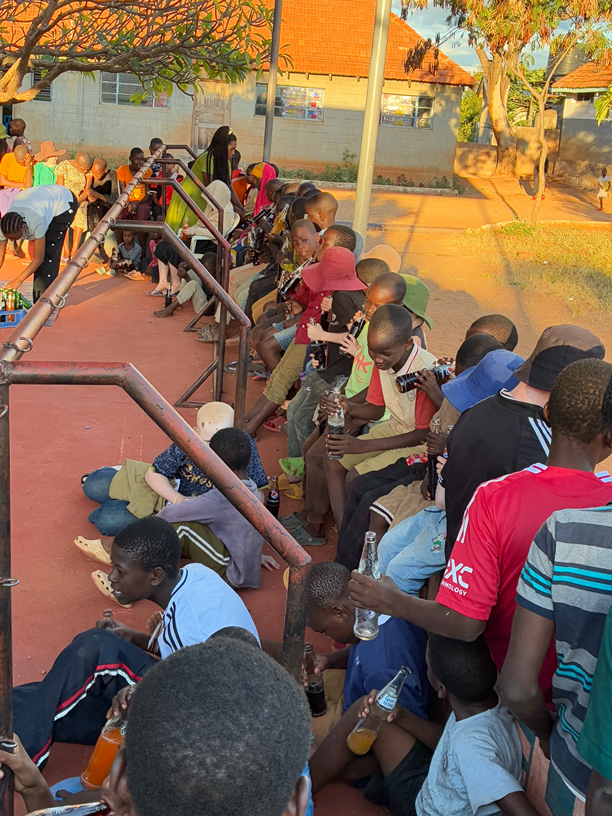
Many years ago a friend in the UK funded sodas for the entire school, and she got back in touch asking to repeat the process, so I bought 144 bottles (£35). Initially when I told the children about the sodas many of them ran off, which I thought was strange, they then returned with plastic bottles so they could decant some of the drink and enjoy it later.
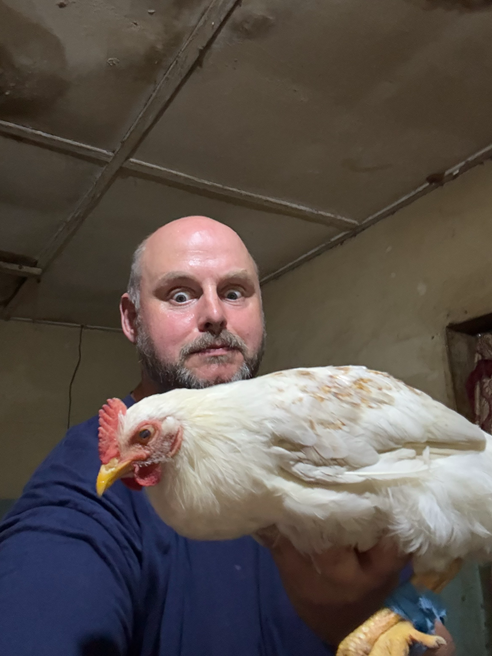
My final night in the village and Mamma Happy and Mrs Kusenha arrived with gifts for me to bring to England: eggs and a chicken. I was a little lost for words! Needless to say, I found a good home for them in the village. It demonstrates the kindness of the people in rural Tanzania though – those who have very little will give what they have as a token of appreciation.
A visit from Teck and his brothers Gaston and Jose. His brothers would always be at my house on past trips, but now they work as plumbers and have their own families, but they wanted to pay me a visit to wish me well on my journey. Their other brother Alan lives in the south and he undertook a 1000km round trip to say hello to me over Easter.
Teck had given my Dad a Zeze stringed instrument, and to wish me well he gave a local finger marimba. He has managed to find the least musical family to equip with instruments.
This is my final photo of the trip – as I arrived in Dodoma to catch the train to leave, Lucy gave me two gifts, one for me and one for my mother – these had been funded by a collection amongst the city’s blind beggars. It felt like the perfect note to end this trip.
If you’ve made it this far—thank you for sticking with me! What I’ve shared is only a glimpse of everything that happened. In total, my records show 54 different projects, ranging from small initiatives costing just a few pounds to larger efforts like the café, bunk beds, and school uniforms, which required hundreds.
If you contributed to any of these—thank you! I did my best to make every pound count. That said, there were still areas I wish I could have supported more, especially school furniture and goalball mats. These will be goals for my next visit to Buigiri in a few years’ time.

























 tomintanzania